
Updated guide: 2025 Forex Sales Playbook: CRMs →
Published 16 December 2024. Parts of this article may be out of date; our latest articles cover the current picture.
If one trend kept growing through 2024, it was brokers getting more deliberate about their Customer Relationship Management (CRM) systems. Most brokers now treat the CRM as something they can't run without. Used properly, it helps them build better client relationships, cut manual work and close more sales in a crowded market.
The Role of CRMs in Forex Sales
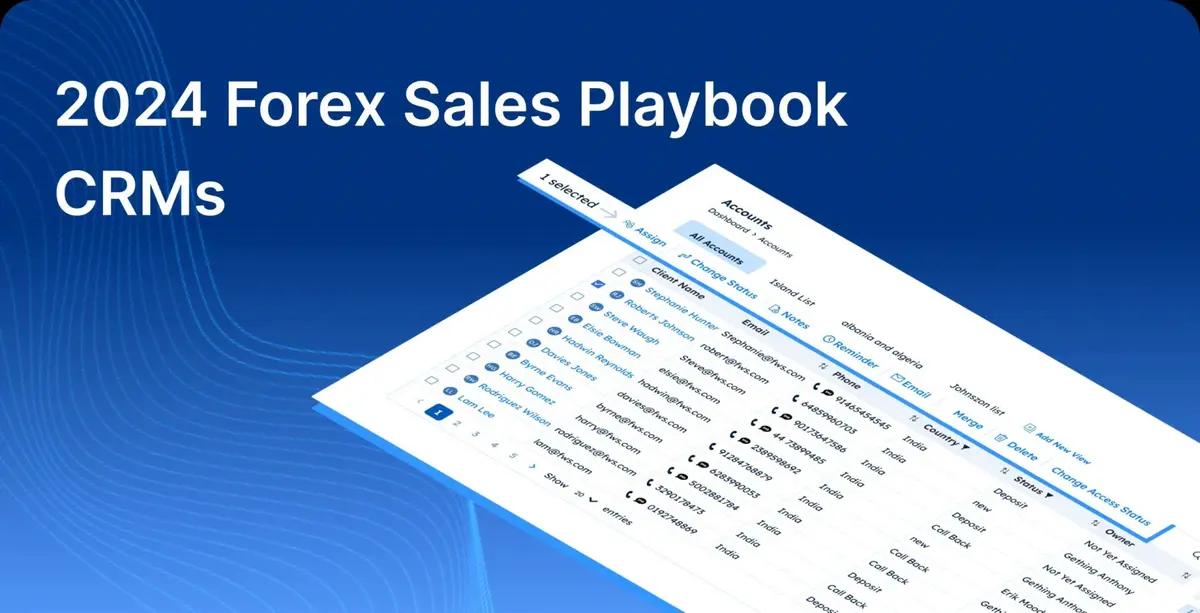
CRMs started out as contact lists. In most brokerages they are now the backbone of daily operations. They hold client data in one organized place, track every interaction and show how clients behave. In 2024 their role in forex sales grew further, as brokers leaned on them to personalize their approach and find growth.
Personalization and Client Engagement
Personalization is a big reason brokers adopt CRMs for sales. Traders differ in their needs, risk appetite and trading style, and one generic message to everyone stopped working some time ago. A CRM lets the broker segment clients and adjust communication and marketing to each group. When you know a client's preferences and trading history, you can offer things they actually care about, and engagement and conversion rates go up.
Organising Lead Management
Lead management is where a forex sales operation wins or loses, and it's an area CRMs handle well. Brokers can capture, categorize and track leads without any falling through the cracks. Automated workflows and reminders move leads through the sales funnel, so more of them convert. As competition tightened in 2024, good lead management became a must for any sales strategy.
Data-Driven Decision Making
CRMs also give brokers data they can act on. Analyzing client data shows trends, tracks campaign performance and tells you which strategies need adjusting. In a market where small changes can have a big effect, that is a real advantage. More brokers in 2024 used CRM analytics to decide where to put their budget and their people.
Enhancing Client Retention
Retention is what keeps a forex business going over the long run. A CRM helps by making sure brokers stay in touch with their clients. Automated follow-ups, task reminders and communication tracking let the team give consistently good service. Clients stay longer, churn drops and lifetime value rises.
Multi-Channel Communication
By 2024 brokers had accepted that clients are spread across many online platforms and channels, and you have to reach them where they pay attention. A CRM handles email, social media, SMS and other channels from one place. Brokers can talk to clients wherever the client prefers, and the brand stays visible.
Compliance and Risk Management
Forex is heavily regulated, and compliance can't be an afterthought. CRMs with built-in compliance features help brokers follow industry rules and data protection standards. They track and document client interactions so the broker has a record if a regulator asks. With scrutiny increasing through 2024, these features became essential for protecting a broker's reputation and business.
Integration Capabilities
Integration with the rest of the stack is one of the first things brokers check. In 2024 most forex brokers ran a set of applications, including trading platforms, analytics tools and risk management systems. A good CRM connects to all of them cleanly, so work flows through one system and nobody retypes data by hand and introduces errors.
Capacity and Adaptability
The forex market is volatile and can grow quickly. A broker expecting more clients needs a CRM that can take the extra workload and data without slowing down. Capacity to grow is what lets a broker respond to changing markets and client demand without disruption. In 2024 that ability to scale and adapt mattered a great deal to brokers with ambitions.
Remote Access and Mobility
With remote work and on-the-go trading now normal, a CRM has to work away from the desk. In 2024 brokers needed access to client information and the ability to manage interactions from any device with an internet connection. Mobile apps and remote access keep the team connected and responsive to clients, in the office, at home or traveling.
Conclusion
The forex industry keeps changing, and brokers face new problems and new openings every year. CRMs have become essential for managing client relationships, running operations efficiently and selling more. Personalization, organized lead management, data-driven decisions and compliance support are why they sit at the center of the 2024 forex sales playbook.
Brokers who put their CRM to proper use will be better placed in a competitive, shifting market, with stronger client relationships and growth that lasts.